How a Car Insurance Claim Repair Works, Step by Step
Learn how a car insurance claim works after an accident: intimation, survey, estimate, repair and settlement, plus common mistakes to avoid.
A car insurance claim can feel confusing when you are already dealing with an accident. The process follows a predictable sequence, though, and knowing it ahead of time helps you avoid delays and mistakes. This guide explains the general steps. Your own policy and insurer decide the specifics, so always follow their instructions.
Step 1: Safety First, Then Inform Your Insurer
After an accident, make sure everyone is safe and move the car out of traffic if you can. Take clear photos of the damage, the surroundings and any other vehicles involved. Then inform your insurer as soon as possible; most insurers have a claim helpline or app and set time limits for reporting. If someone is injured, there is third-party damage or the vehicle is stolen, a police report (FIR) is usually required.
Step 2: Understand What Your Policy Covers
There are two main kinds of coverage:
- Own damage: covers damage to your car under a comprehensive policy.
- Third-party liability: covers damage or injury you cause to others.
Check your policy for deductibles, exclusions and add-ons such as zero depreciation, engine protection or roadside assistance. These determine how much the insurer pays and what you pay.
Step 3: Survey and Repair Estimate
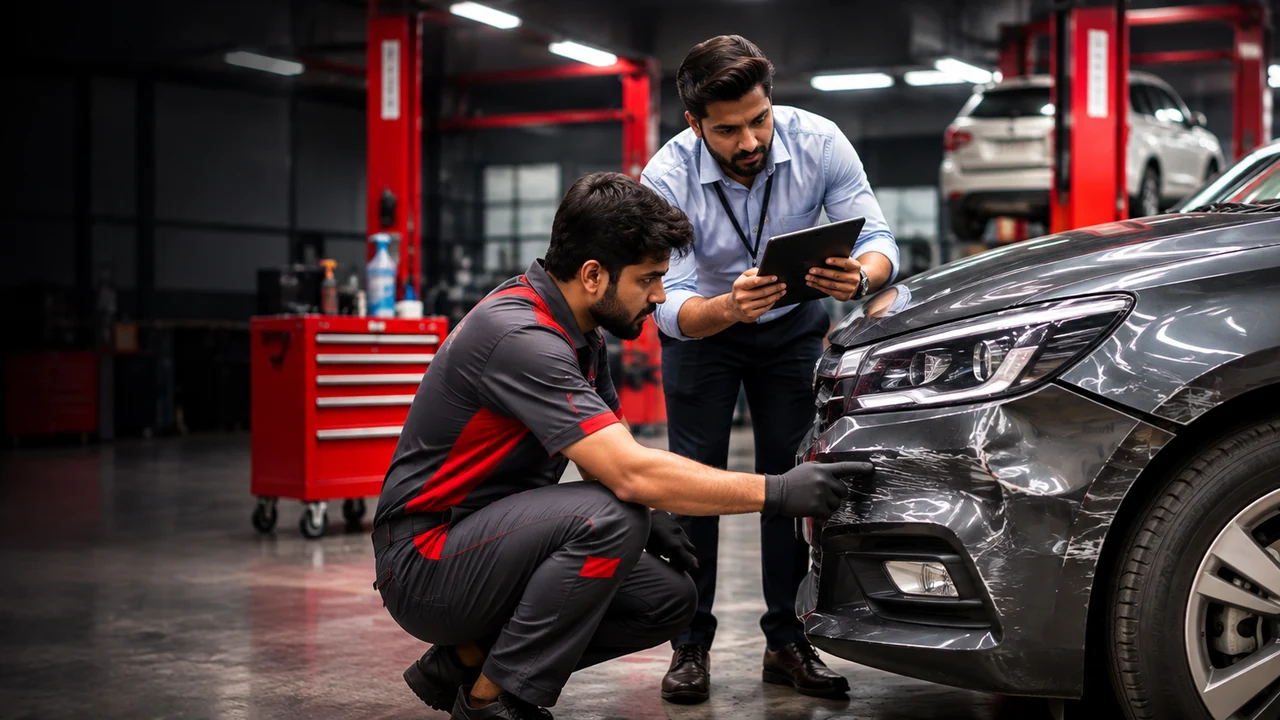
The insurer usually appoints a surveyor to assess the damage. A workshop prepares a repair estimate listing the parts and labour needed. If the workshop is on your insurer's cashless network, the estimate can go directly to the insurer for approval. Ask your insurer and workshop whether cashless is available for your policy before you proceed.
Step 4: Approval
The insurer reviews the estimate and approves it, sometimes with changes. Do not start repairs until approval comes, unless your insurer says otherwise. If hidden damage appears once the car is opened up, the workshop informs the insurer so the estimate can be revised.
Step 5: Repair
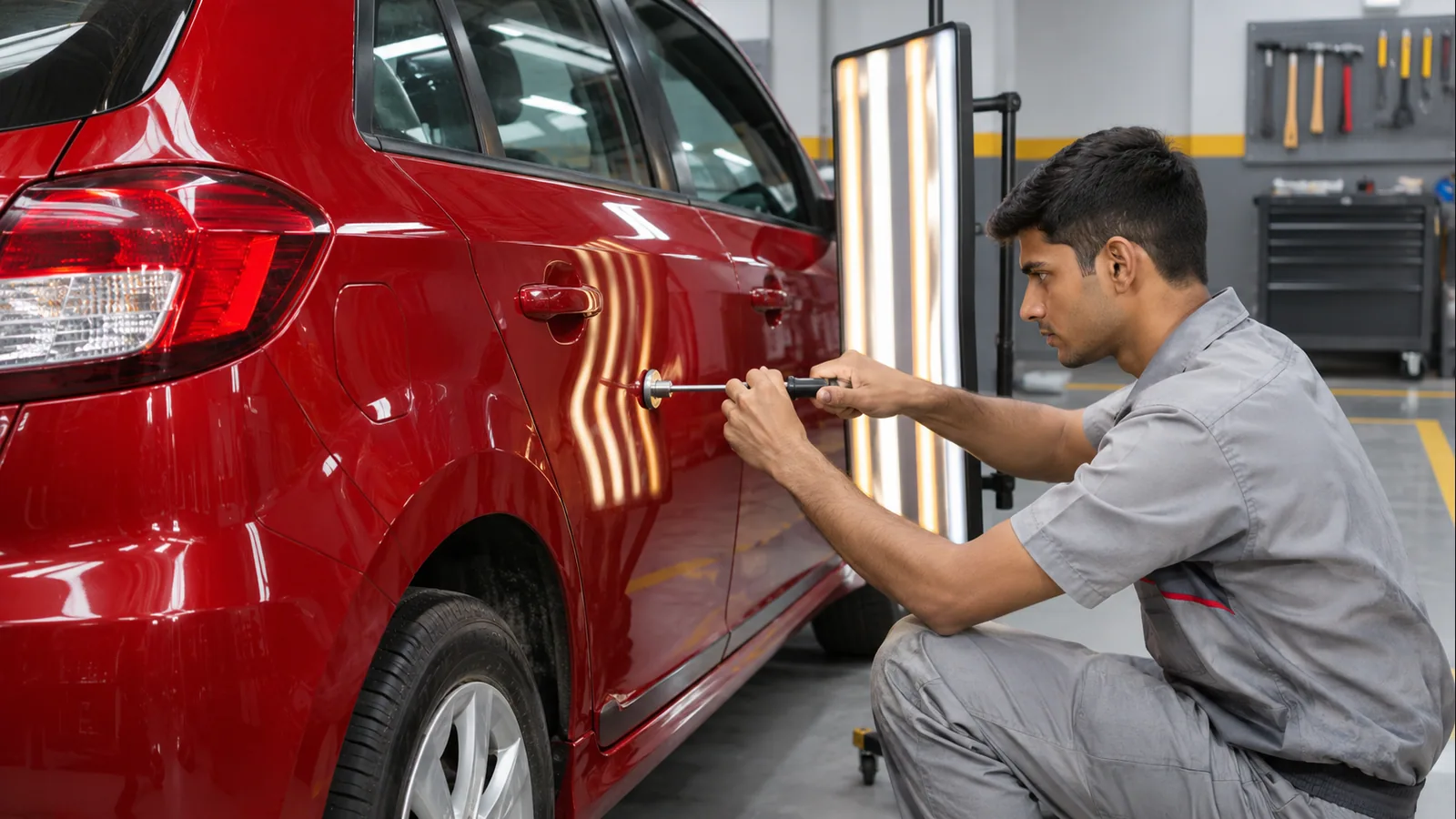
Once approved, the work begins. Typical accident repairs include dent removal, panel repair or replacement, painting and mechanical repairs. A good denting and painting job depends on careful preparation and colour matching, and the finish is checked before the car is returned.
Step 6: Handover and Settlement
When the repair is complete, inspect the car with the workshop, preferably in daylight. Check panel gaps, paint match and that everything works. In a cashless claim, you pay any deductible or non-covered items. In a reimbursement claim, you pay the workshop and submit bills to your insurer for payment.
Documents You Will Usually Need
Requirements differ by insurer, but commonly include:
- Policy copy
- Registration certificate (RC)
- Driving licence
- Claim form
- Photos of the damage
- FIR copy where applicable
- Repair estimate and final invoice
Common Mistakes to Avoid
- Repairing before the survey. This can make it hard for the insurer to verify the damage.
- Delaying the intimation. Late reporting can lead to rejection.
- Not reading the exclusions. Some damage, such as wear and tear or water damage from restarting a flooded engine, may not be covered.
- Ignoring the No Claim Bonus impact. For minor damage, paying out of pocket may be cheaper in the long run.
- Not checking the repair. Review the work before you accept the car.
Where We Fit In
At ROADSTERGURU we repair accident-damaged cars and help customers understand the process and gather documents. We cannot approve a claim or guarantee a settlement; that is the insurer's decision. If you are near Shahberi, Noida Sector 52 or anywhere in Greater Noida West, read about our insurance claim service and send us your policy details and photos on WhatsApp. We will explain the next step.
Repair Approval and Insurer Decisions
An insurer may request photographs, an inspection or additional documents before approving a repair. Do not assume that a workshop estimate is the same as the amount the insurer will pay.
Ask about deductibles, excluded damage, replacement-part rules and the process for supplementary damage discovered after disassembly.
Frequently Asked Questions
Usually not. Most insurers want the surveyor to see the damage as it is, and work done before inspection may not be covered. Take photos, inform the insurer and follow their instructions on when repairs can begin.
In a cashless claim, the insurer pays the approved repair cost directly to the workshop, and you pay only items not covered, such as a deductible. In reimbursement, you pay first and the insurer pays you back after approval.
Usually yes. A claim typically resets or reduces your No Claim Bonus at renewal. For small repairs, compare the repair cost against the bonus you would lose.