Why Regular Wheel Alignment Matters for Your Car
What wheel alignment is, the signs your car needs it, how it differs from balancing and why potholes and speed breakers make regular checks worthwhile.
Wheel alignment matters because it keeps your car tracking straight, protects tyres from uneven wear and keeps steering and handling predictable. When the wheel angles drift out of specification, tyres scrub against the road instead of rolling cleanly, the steering may pull, and you end up replacing expensive tyres early. On roads with frequent potholes and speed breakers, alignment can drift faster than many owners expect. In short, regular wheel alignment matters for safety, tyre life and comfort.
What Wheel Alignment Actually Is
Alignment is the adjustment of the angles at which the wheels meet the road. Three angles matter most:
- Toe: whether the fronts of the tyres point slightly inward or outward when viewed from above.
- Camber: whether the tops of the tyres tilt inward or outward when viewed from the front.
- Caster: the forward or backward tilt of the steering axis, which affects straight-line stability and steering return.
Manufacturers specify a target and tolerance for each angle. On most everyday cars, toe is the main adjustable setting, with camber and caster adjustable on some models.
Alignment Versus Balancing
These are often done together but solve different problems.
- Alignment corrects the angles, which affects pulling and tyre wear.
- Balancing adds small weights to the wheel rim so the wheel and tyre spin evenly, which affects vibration at speed.
If your steering wheel shakes at a particular speed, balancing is the first suspect. If the car drifts to one side, alignment is. Our wheel alignment and balancing service checks both.
Signs Your Car Needs an Alignment Check
- The car drifts or pulls to one side on a straight, level road.
- The steering wheel is off-centre when driving straight.
- Tyres are wearing faster on the inner or outer edges.
- Tyres squeal on gentle turns at low speed.
- The steering feels loose or less responsive than usual.
Road camber can make any car drift slightly, so try a few different roads before concluding there is a problem.
Why Local Roads Knock Alignment Out
Alignment does not drift for no reason. It changes when suspension and steering parts take an impact or wear. Hitting a deep pothole, crossing a sharp speed breaker too fast or bumping a kerb while parking can all shift the settings. Ongoing construction across Greater Noida West and the service roads near Techzone 4 mean patched surfaces and sudden dips are common. Wear in tie-rod ends, ball joints and bushes also allows the angles to change over time.
When to Get Alignment Checked
Beyond any manufacturer interval, have it checked:
- when you fit new tyres, so they start life with correct settings,
- after any suspension or steering repair,
- after a hard impact with a pothole or kerb,
- whenever you notice the symptoms listed above.
Many owners combine an alignment check with their periodic car service, which also catches worn suspension parts.
What Happens During an Alignment
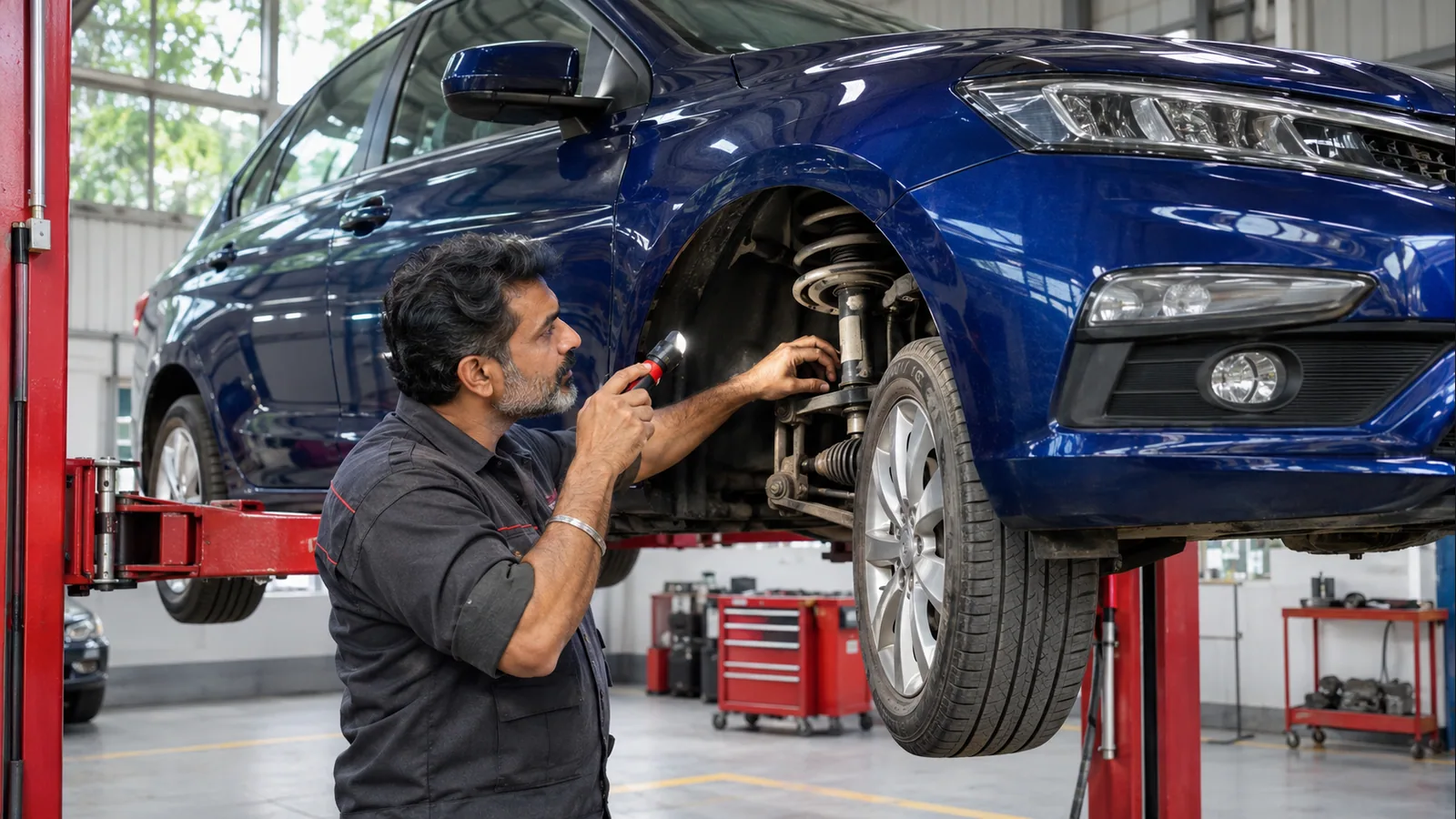
- The technician checks tyre pressures and looks for worn steering and suspension parts, because aligning a car with worn parts does not hold.
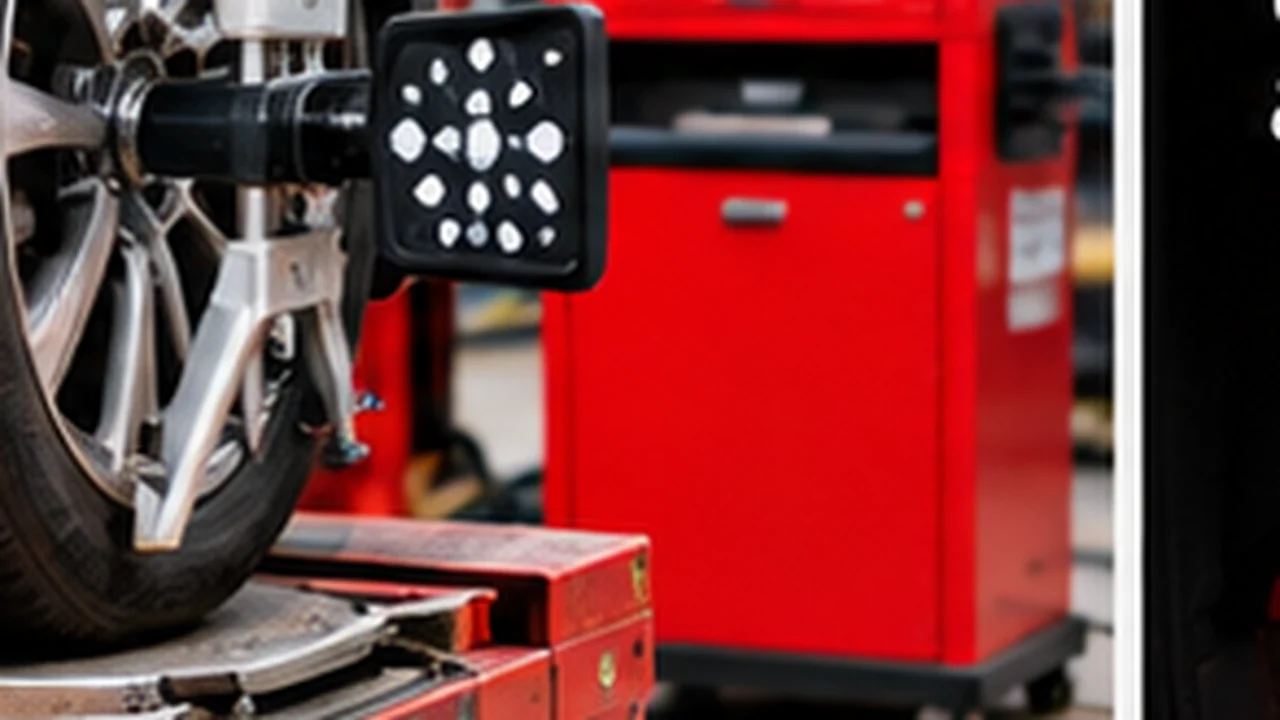
- Sensors or targets are mounted on each wheel.
- The alignment machine compares the current angles with the manufacturer's specification.
- Adjustable settings are corrected, usually toe at the front, and the steering wheel is centred.
- A printout or screen shows before and after readings, and a short test drive confirms the car tracks straight.
The Cost of Ignoring It
Misalignment rarely causes sudden failure, which is why it gets postponed. The cost builds quietly. A tyre that wears its inside edge can look fine from outside until the steel cords show. By then the tyre needs replacing, and often its partner too. Pulling also makes long drives more tiring, and uneven tyres reduce grip in the wet.
Suspension and Alignment Go Together
Alignment cannot compensate for worn components. If ball joints, tie-rod ends or bushes are loose, the angles move while you drive. If you notice knocking over bumps or a wandering feel, read our guide to car suspension problems on city roads and mention the symptoms when you book.
Simple Habits That Help
- Slow down properly for speed breakers and potholes.
- Avoid driving up kerbs when parking.
- Check tyre pressures monthly; uneven pressure mimics alignment problems.
- Rotate tyres according to your manual to even out wear.
Conclusion
Regular wheel alignment protects your tyres, keeps the car tracking straight and makes driving less tiring. On roads with plenty of potholes and speed breakers, it is worth checking more often than you might think.
If your car pulls, the steering is off-centre or the tyres are wearing unevenly, call ROADSTERGURU on 9990700500 or book on WhatsApp. We check alignment and balancing at our Patwari workshop in Greater Noida West.
Frequently Asked Questions
Alignment adjusts the angles of the wheels relative to the car and each other. Balancing corrects uneven weight distribution around a wheel and tyre so it spins smoothly without vibration.
Follow your manufacturer's guidance, and also check alignment after fitting new tyres, after suspension or steering work, or after a hard pothole or kerb impact.
Yes. Incorrect toe or camber makes tyres scrub against the road, wearing the edges unevenly and shortening their life.
Not usually. Vibration at certain speeds is more often a balancing issue or a damaged wheel or tyre. Pulling to one side is the classic alignment symptom.
Correct alignment reduces tyre drag, which can help efficiency slightly, but its main benefits are tyre life, straight tracking and stable handling.