When Should You Replace Your Car Brake Pads?
How to tell when car brake pads need replacing, from squealing and grinding to longer stopping distances, and what a proper brake inspection checks.
Brake pads should be replaced when they reach the minimum thickness specified by the manufacturer, or sooner if you notice warning signs such as a persistent squeal, grinding, a vibrating brake pedal or longer stopping distances. Because pad life varies so much with driving style and traffic, the only reliable way to know is to have them measured during regular servicing.
This article explains how brake pads wear, the signs to watch for and what a good brake inspection includes.
Knowing when to replace your car brake pads starts with understanding how they work.
How Disc Brakes Work
When you press the pedal, hydraulic pressure pushes the brake caliper pistons, which clamp the pads against a spinning disc (rotor) attached to the wheel. Friction converts the car's motion into heat and slows it down. Every stop removes a tiny amount of pad material. Many cars use discs at the front and either discs or drums with shoes at the rear.
Why City Driving Wears Pads Faster
Brake pads wear in proportion to how often and how hard you stop. Commuting through stop-start traffic, roundabouts and speed breakers means hundreds of stops on a short trip. A car driven mainly within Greater Noida West and Noida Extension can wear its front pads noticeably faster than a car that spends most of its time on highways. Heavier cars, frequent full loads and aggressive braking shorten pad life further.
Warning Signs That Pads Need Attention
Squealing or Squeaking
Many pads have a small metal wear indicator that touches the disc when the pad gets thin, producing a high-pitched squeal when you brake. Dust and moisture can also cause harmless noise, but a persistent squeal deserves a check.
Grinding
A harsh grinding noise usually means the pad material is worn through and metal is contacting the disc. This damages the disc quickly and reduces braking. Get it inspected immediately.
Vibration Through the Pedal or Steering
A pulsing pedal or steering shake when braking often points to uneven disc surfaces. It can also come from suspension or wheel issues, which our article on steering vibration causes covers.
Longer Stopping Distances or a Soft Pedal
If the car takes longer to stop, or the pedal feels spongy or sinks, the cause may be worn pads, air in the brake lines, old brake fluid or a leak. A soft pedal is a safety issue.
The Car Pulls When Braking
Pulling to one side under braking can mean a sticking caliper, uneven pad wear or a hydraulic problem on one side.
Brake Warning Light
Some cars have pad wear sensors that trigger a dashboard warning. The brake warning light can also indicate low brake fluid.
What a Proper Brake Inspection Includes
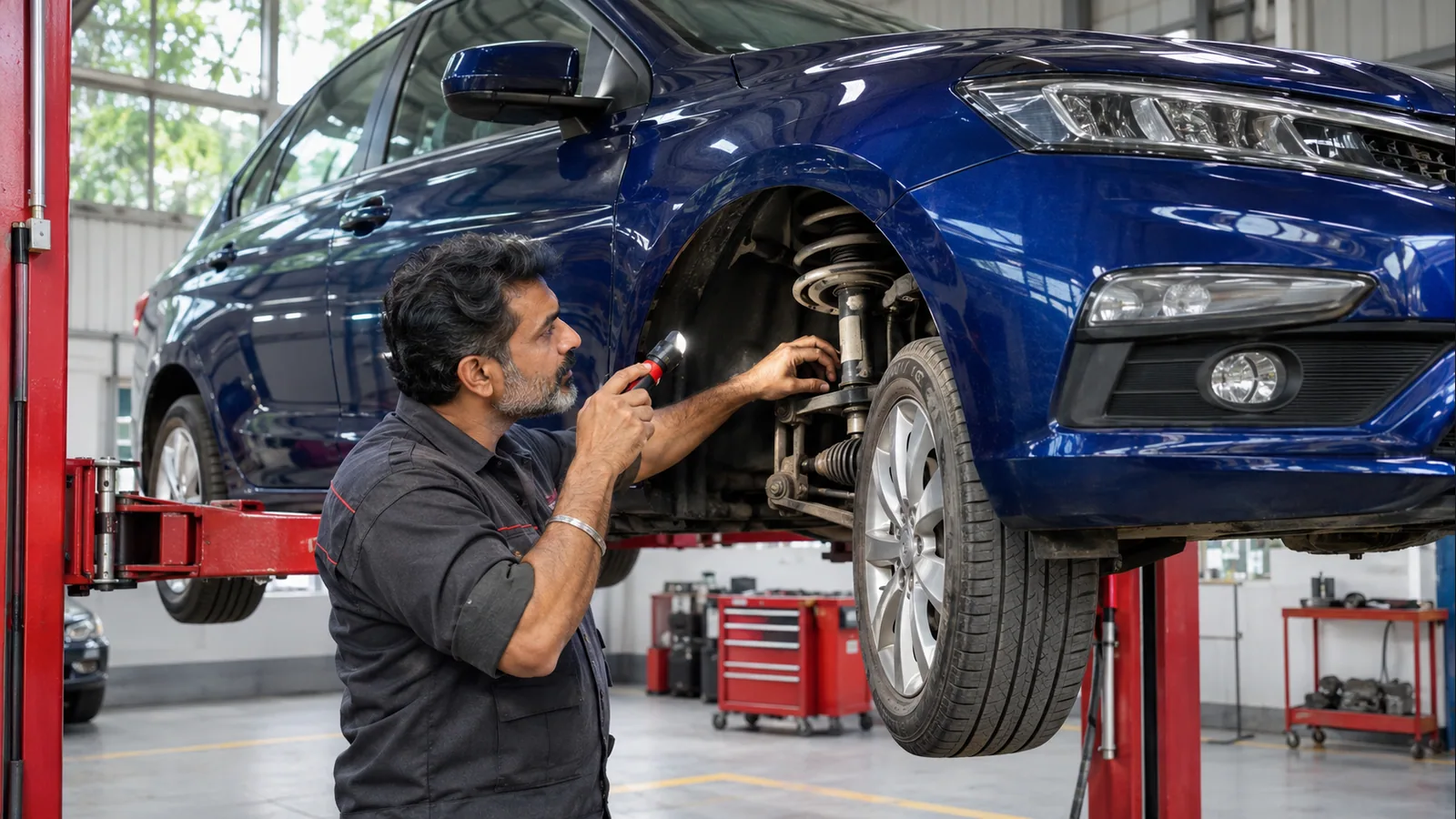
A thorough inspection, usually done with the wheels removed, checks:
- pad thickness on both sides of each caliper,
- disc thickness, surface condition and run-out,
- caliper slide pins and pistons for sticking,
- brake hoses and lines for cracks or leaks,
- brake fluid level and condition,
- rear drums and shoes where fitted,
- handbrake adjustment.
This is part of a good periodic car service, so most owners do not need a separate brake check unless they notice a symptom.
Replacing Pads: What to Expect
Pads are replaced in axle sets so braking stays balanced. During replacement, a careful technician cleans and lubricates the caliper slides, checks the pistons and inspects the discs. If the discs are scored, too thin or warped, they are replaced or, where the manufacturer allows, resurfaced. New pads need a short bedding-in period, so avoid hard braking for the first drive or two.
Brake Fluid Matters Too
Brake fluid absorbs moisture from the air over time. Moisture lowers the fluid's boiling point, which can cause a soft pedal after repeated hard braking. Follow your manual's replacement interval rather than simply topping it up.
Rear Brakes Need Attention Too
Front brakes do most of the work, so they wear first, but rear discs or drums still need regular checks. Drum brakes can collect dust, the shoes can wear unevenly and wheel cylinders can leak. Because rear brakes are less visible and often quieter when worn, they are easy to forget until the handbrake stops holding properly or the car fails to stop evenly. Having all four corners inspected at each service avoids that surprise.
Habits That Extend Pad Life
- Look further ahead and ease off the accelerator early.
- Avoid carrying unnecessary weight.
- Keep tyre pressures correct and wheels aligned; see why regular wheel alignment matters.
- Have the brakes checked at every service rather than waiting for noise.
Conclusion
Replace brake pads when they reach minimum thickness or when warning signs appear: squealing, grinding, vibration, a soft pedal or longer stopping distances. Brakes are not a component to postpone.
If you notice any of these symptoms, call ROADSTERGURU on 9990700500 or message us on WhatsApp. We inspect brakes at our Patwari workshop in Greater Noida West and explain what needs doing, and the cost, before any work starts.
Frequently Asked Questions
There is no single figure. Pad life depends on the car, pad material and driving. Stop-start city traffic wears pads much faster than steady highway driving, so measuring the pads is the only reliable guide.
Occasional light squeaks can be harmless, but a persistent high-pitched squeal often comes from a wear indicator. Have the pads checked soon.
Not always. Discs are measured for thickness and checked for scoring or warping. If they are within the manufacturer's limits and in good condition, they can be reused.
Yes. Pads are replaced in axle sets, both front or both rear, so braking stays even across the car.
Follow the interval in your owner's manual. Brake fluid absorbs moisture over time, which reduces its effectiveness, so it is replaced periodically rather than only topped up.